Grounded by Design: What Your Rug Placement Reveals About Your Space
Walk into a beautifully designed room and something registers before you can name it—a sense of order, warmth, or invitation. Frequently, that feeling originates beneath your feet. Area rugs do far more than protect hardwood floors or add color to a neutral palette. When placed with intention, they direct movement, establish hierarchy, and communicate comfort in ways that wall art and furniture alone cannot.
For homeowners navigating open floor plans or rooms that never quite feel finished, understanding the psychology behind rug placement can be genuinely transformative.
The Anchoring Effect: Why Every Room Needs a Visual Foundation
In design psychology, the concept of visual anchoring refers to the way certain elements hold a composition together and signal to the eye where to rest. A sofa floating in the center of a large living room, unmoored from any architectural boundary, creates subtle cognitive discomfort—the brain registers that something is unresolved.
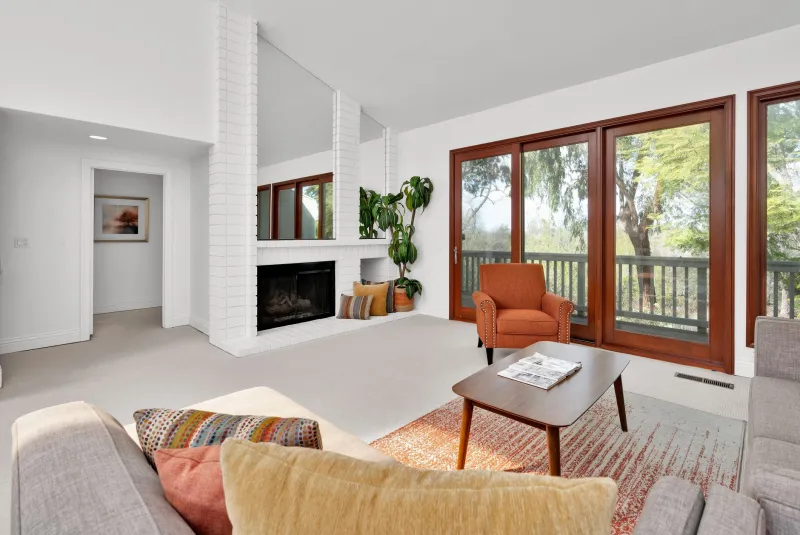
An appropriately scaled area rug beneath that seating group resolves the tension immediately. Interior designers consistently recommend that, in a living room, the front legs of all major seating pieces rest on the rug. This approach creates a cohesive furniture island that reads as a unified zone rather than a collection of unrelated objects.
The rule is not arbitrary. It draws from Gestalt principles of proximity and enclosure, which suggest that objects sharing a defined boundary are perceived as belonging together. The rug provides that boundary without the permanence of walls or architectural partitions.
Zoning in Open-Concept Spaces
The open-concept floor plan remains one of the most popular layout choices in American residential design, yet it presents a persistent challenge: how do you define distinct functional areas when there are no walls to do it for you?
Strategically placed area rugs answer this question with remarkable elegance. A dining rug centered beneath a table and chairs creates an implied room within a room, signaling that this area is for gathering and meals. A separate rug beneath a reading chair and side table in the same great room communicates a quieter, more contemplative zone. The two rugs can share a color story while differing in pattern or scale, maintaining visual cohesion while still articulating separate purposes.
Design professionals often describe this technique as "soft architecture." Unlike built-in partitions or furniture dividers, rugs define space without obstructing sightlines or limiting natural light—a particularly valuable quality in the open-plan homes that dominate new construction across the United States.
Perceived Dimensions: How Rugs Manipulate Scale
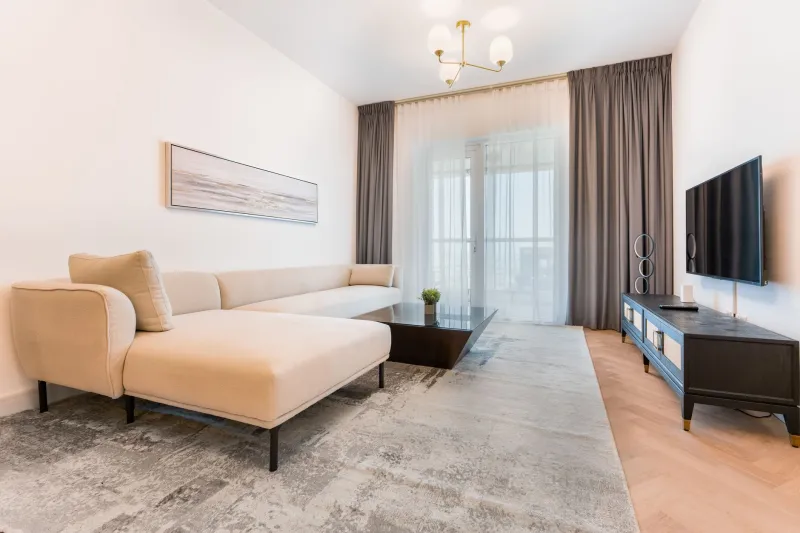
One of the most underappreciated functions of an area rug is its capacity to alter perceived room dimensions. A rug that is too small for a space—a common mistake among first-time buyers—draws the eye inward and makes the room feel cramped and poorly proportioned. Conversely, a rug sized correctly to the furniture grouping creates a sense of generous scale, even in modestly sized rooms.
In narrow rooms, a rug with a strong horizontal pattern or orientation can visually widen the space. In low-ceilinged rooms, a rug with vertical striping or a pattern that draws the eye lengthwise along the floor can counterbalance the compressed vertical dimension. These are not tricks so much as deliberate applications of how human perception processes line and proportion.
For bedrooms specifically, designers typically recommend extending the rug at least 18 to 24 inches beyond the sides and foot of the bed. This creates a luxurious landing when rising in the morning and visually expands the room by pushing the perceived boundary of the sleeping zone outward.
Color, Texture, and Emotional Register
Beyond spatial logic, rugs carry significant emotional weight through their material and chromatic qualities. Environmental psychology research consistently finds that warm-toned surfaces—terracotta, amber, warm ivory—evoke feelings of safety and intimacy, while cooler tones such as slate blue or sage green tend to promote calm and focus.
Texture operates on a similarly primal level. A high-pile wool rug in a family room communicates softness and approachability. A flat-woven kilim in a home office signals structure and intention. Neither choice is inherently superior; the question is always what emotional experience the space is meant to deliver.
Designers working with clients who struggle to articulate what feels "off" about a room frequently find that the issue is tonal misalignment between the rug and the intended emotional register of the space. A sleek, cool-toned rug in a room meant to feel warm and familial will always create a subtle sense of discord, regardless of how well the individual pieces are chosen.
Practical Placement Principles to Apply Today
Understanding the theory is only useful if it translates into actionable decisions. The following guidelines, drawn from professional interior design practice, offer a reliable starting point for most residential spaces.
In the living room: Aim for a rug large enough to accommodate all front legs of your seating pieces. In a standard American living room, this typically means a minimum of 8×10 feet, with 9×12 often being ideal for larger groupings.
In the dining room: The rug should extend at least 24 inches beyond the edge of the table on all sides, ensuring that chair legs remain on the rug when pulled out for seating.
In the bedroom: A rug that extends generously beyond the bed on three sides creates a sense of luxury and spatial generosity. Alternatively, two matching runners placed on either side of the bed offer a more tailored aesthetic.
In entryways and hallways: Here, rugs serve a transitional function, signaling a shift from one zone to another. Choose a runner or accent rug that fits comfortably within the space without crowding the walls, and prioritize durability and ease of cleaning given the high-traffic nature of these areas.
The Rug as a Design Statement
Ultimately, thoughtful rug placement is an act of spatial storytelling. Every positioning decision communicates something about how a room is meant to be used, who it is designed for, and what emotional experience it is intended to create. Approached with this understanding, selecting and placing an area rug becomes far less about following trends and far more about crafting an environment that resonates at a genuinely human level.
For homeowners and designers alike, the rug beneath your feet may be the most consequential design decision in the room.