The Rug as Remedy: Solving Your Room's Most Stubborn Design Problems
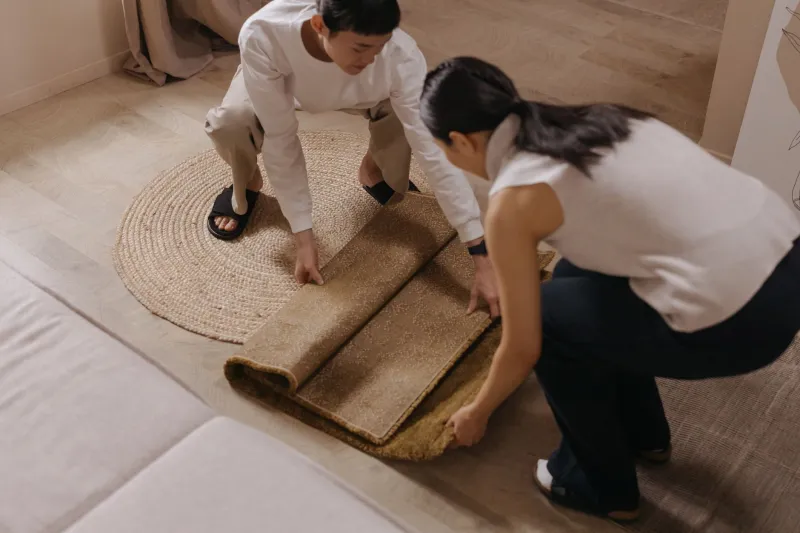
There is a particular frustration that settles over a room that refuses to come together. The furniture is thoughtfully selected, the paint color was carefully considered, and yet something remains fundamentally off. Before embarking on a costly renovation or a wholesale replacement of furnishings, it is worth examining the floor. A strategically chosen rug — one selected with intention rather than impulse — has the capacity to resolve compositional failures that no throw pillow or accent lamp can address.
The following scenarios draw from recurring design challenges that interior professionals and homeowners across the United States encounter regularly. Each illustrates a distinct principle of rug-based problem-solving.
The Cavernous Living Room That Swallows Everything
Among the most common complaints in larger American homes — particularly those built during the late 1990s and early 2000s, when open floor plans reached peak popularity — is the room that feels more like a waiting area than a living space. High ceilings compound the problem, drawing the eye upward and leaving the seating arrangement feeling adrift.
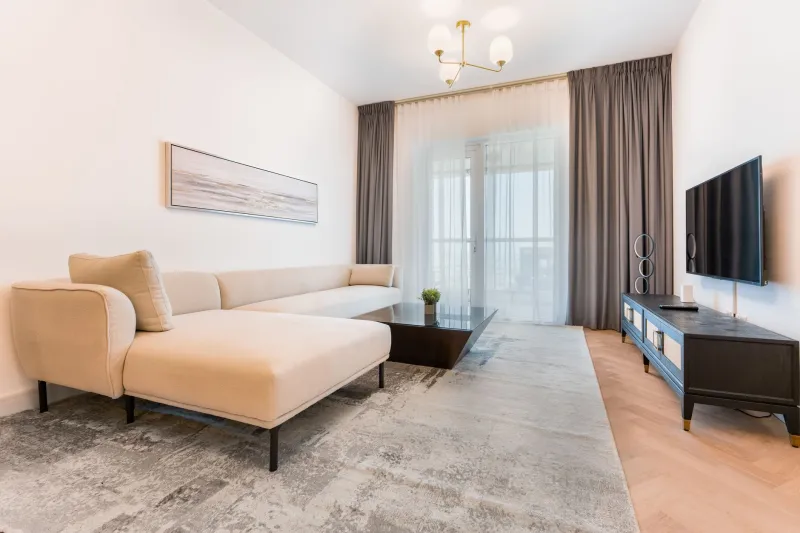
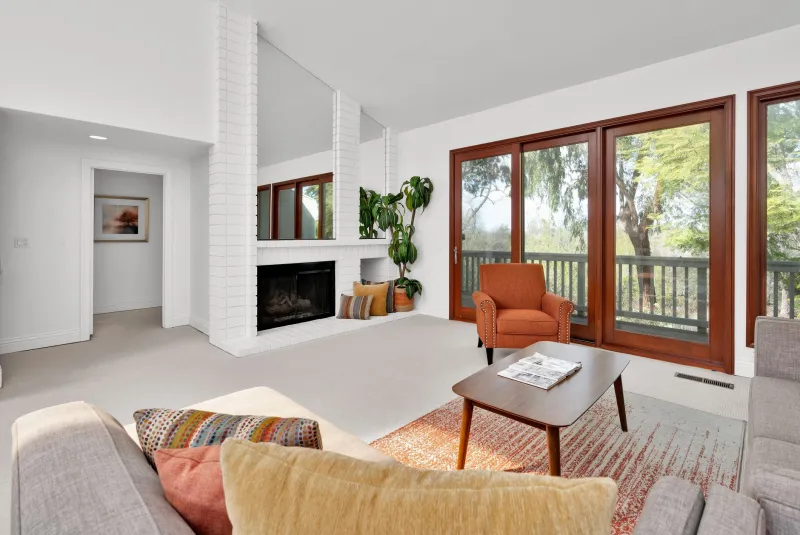
The corrective principle here is spatial anchoring. A rug functions as a visual foundation, effectively "pinning" a furniture grouping to a defined zone within a larger room. The critical error most people make is selecting a rug that is too small — one that sits beneath only the coffee table, leaving the sofa and chairs hovering at its perimeter. This approach worsens the problem, creating an island effect that emphasizes the surrounding emptiness.
The remedy: a rug large enough that all primary seating pieces rest with at least their front legs on the textile. In a generous living room, this often means committing to a 9-by-12-foot or even a 10-by-14-foot option. The psychological effect is immediate. The seating arrangement reads as a unified composition rather than a loose collection of furniture, and the room acquires a sense of human scale.
Pattern also plays a role in this scenario. A large-scale geometric or a traditional medallion design draws the eye downward and inward, counteracting the verticality that makes oversized rooms feel inhospitable.
The Open-Plan Space With No Sense of Separation
The open-concept floor plan remains a dominant feature in American residential design, and it presents a recurring challenge: how to create the feeling of distinct rooms — a dining area, a living zone, a study nook — without the benefit of walls.
Rugs are among the most elegant solutions to this problem. By placing a rug beneath each functional area, a designer effectively draws invisible boundaries that the eye and mind recognize as room divisions. The key is deliberate contrast between zones. If the living area rug carries a warm, textured weave in muted earth tones, the dining area might feature a flatter, more graphic pattern in a cooler palette. The visual distinction signals transition without requiring architectural intervention.
One important caution: the rugs in adjacent zones should share at least one design element — a common color, a similar material weight, or a complementary scale of pattern — to maintain cohesion across the open plan. Entirely unrelated rugs placed in close proximity tend to create visual noise rather than harmonious definition.
The Bedroom That Feels Cold and Disconnected
A bedroom furnished with a beautiful bed frame and quality bedding can still feel sterile if the floor is left bare or covered with only a small accent rug. This is particularly true in homes with hardwood or tile flooring, where the acoustic quality of the room amplifies the sense of emptiness.
The design failure in these spaces is typically one of proportion and placement. A rug that extends only partially beneath the bed — or worse, one positioned entirely at its foot — leaves the room feeling incomplete.
The corrective approach depends on bed size and room dimensions, but a reliable standard is to position the rug so that it extends 18 to 24 inches beyond the sides and foot of the bed. This creates a soft landing for bare feet in the morning and, more importantly, frames the bed as the room's focal point. The rug becomes a stage upon which the bed is presented, lending the entire space a sense of intentionality.
In terms of color, a bedroom rug can perform remarkable corrective work when the existing palette has gone awry. A room dominated by cool grays that feels clinical rather than restful can be warmed considerably by the introduction of a rug in a low-contrast, earthy tone — a faded terracotta, a dusty sage, or a warm ivory. The floor, being the largest horizontal surface in the room, exerts considerable influence over the perceived temperature of the space.
The Narrow Hallway or Awkward Transitional Space
Entry halls, corridors, and transitional spaces are frequently neglected in the design process, and the result is a home that makes a poor first impression or feels disjointed as one moves through it. Long, narrow hallways are particularly susceptible to a tunnel-like quality that no amount of wall art entirely resolves.
A runner rug — selected with attention to both length and visual weight — can reframe a hallway's proportions. A runner with a strong longitudinal pattern, such as a repeating stripe or a border design that runs along its length, will actually elongate the space further, which is desirable in short entries. Conversely, a runner with a transverse element or a consistent all-over pattern will soften the tunnel effect in an overly long corridor.
The material choice matters as well. In high-traffic transitional spaces, a flat-woven or low-pile construction offers durability without sacrificing design impact. Kilims and dhurries, both widely available through US retailers and import specialists, are particularly well-suited to these applications.
Applying These Principles to Your Own Space
The scenarios above are not exhaustive, but they illuminate a consistent underlying logic: the rug is not merely decorative. It is a structural element of the room's composition, one that governs scale, defines territory, moderates color, and mediates the relationship between furnishings and the space they occupy.
Before selecting a rug for a challenging room, it is worth spending time with the following questions. What is the room's primary design failure — is it scale, cohesion, warmth, or definition? What role does the floor currently play in that failure? And what specific quality — size, color, pattern, texture — would a rug need to possess in order to address the problem rather than compound it?
Answering these questions with precision is the difference between a rug purchase that transforms a room and one that simply adds another layer to an existing problem. The floor, after all, is where every room begins.