The Considered Purchase: A Buyer's Guide to Sourcing and Evaluating Vintage Rugs
The market for vintage and antique rugs has experienced a significant resurgence among American homeowners and interior designers alike, driven by a convergence of sustainability concerns, appreciation for fine craftsmanship, and the enduring appeal of objects with genuine history. Unlike mass-produced contemporary rugs manufactured to meet trend cycles, a well-chosen vintage piece carries within its fibers a record of human skill, regional tradition, and time—qualities that no amount of modern production can fully replicate.
Navigating this market successfully, however, requires a working knowledge of where to look, what to look for, and how to assess value with confidence. The difference between a transformative acquisition and a costly mistake often comes down to preparation.
Understanding the Terminology: Vintage, Antique, and Semi-Antique
Before entering the market, it is useful to understand how the industry categorizes age. In the rug trade, the term antique typically refers to pieces that are at least 80 to 100 years old. Semi-antique or old rugs generally fall in the 40-to-80-year range, while vintage describes pieces that are roughly 20 to 40 years old. These designations affect both pricing and the type of wear one might expect to encounter.
For most American buyers, the semi-antique and vintage categories offer the most practical value. These rugs are old enough to carry genuine character—natural dye variations, slight asymmetries, authentic pile softening—without the fragility or prohibitive pricing that can accompany true antiques. They are also more readily available through accessible sourcing channels.
Where to Source: A Practical Overview of the American Market
Estate Sales and Auctions
Estate sales remain one of the most reliable sources for quality vintage rugs in the United States, particularly in older residential markets such as New England, the Mid-Atlantic states, and the Southeast. Homes that have been occupied for several decades frequently contain rugs acquired during the mid-twentieth century, when Persian and Turkish imports were widely available through department stores and specialty dealers. The advantage of estate sales is the opportunity to inspect pieces in person before purchase. The limitation is that inventory is unpredictable and competition among experienced buyers can be significant.
Major auction houses—including Heritage Auctions, Doyle, and regional firms operating in cities like Chicago, Boston, and Philadelphia—hold periodic textile and decorative arts sales that include rugs of notable quality. Online auction platforms have expanded access considerably, though bidding on items one cannot physically inspect carries inherent risk.
Online Marketplaces
Platforms including 1stDibs, Chairish, and Etsy have become significant venues for vintage rug transactions. Each has a different character: 1stDibs tends toward higher-end dealer inventory with corresponding pricing; Chairish offers a wide range of quality levels from both dealers and private sellers; Etsy hosts an eclectic mix of individual sellers, some highly knowledgeable and others less so.
eBay remains a surprisingly productive source for buyers who know precisely what they are looking for and understand how to evaluate condition from photographs. The platform's breadth means that unusual regional pieces—Central Asian tribal rugs, Romanian kilims, early American hooked rugs—occasionally surface at prices well below dealer retail.
Specialty Dealers and Rug Galleries
For buyers seeking guidance alongside inventory, established rug dealers offer an experience that no online platform can replicate. Reputable dealers in cities such as New York, Los Angeles, San Francisco, and Washington, D.C., maintain curated collections and can speak knowledgeably about provenance, condition, and restoration history. The pricing will generally be higher than auction or private-sale alternatives, but the expertise and accountability that accompany a dealer relationship have genuine value—particularly for first-time buyers.
Evaluating Condition: What to Examine Before Committing
Condition assessment is the single most important skill a vintage rug buyer can develop. The following areas warrant careful attention in every evaluation.
Pile Evenness and Wear Run your hand across the pile in multiple directions. Uneven pile height can indicate irregular wear, prior repairs, or clipping used to disguise staining. A rug with evenly distributed low pile—what the trade calls a "low but even" condition—is generally preferable to one with areas of pronounced thinness alongside areas of full pile.
Foundation Integrity Turn the rug over and examine the foundation—the warp and weft threads that form the structural backbone of the piece. Brittle, cracking, or broken foundation threads are a serious concern, as they indicate structural compromise that may worsen with use. A foundation that is supple and intact, even if the pile above it is worn, suggests a rug with considerable life remaining.
Dye Stability Moisten a white cloth and press it firmly against several areas of the rug, including areas of different colors. If dye transfers significantly onto the cloth, the rug has unstable dyes that may bleed during cleaning—a meaningful limitation. Some color transfer is normal in very old pieces, but pronounced bleeding in a rug represented as cleanable warrants reconsideration.
Odor A musty or persistent animal odor can indicate prolonged storage in damp conditions or contamination that may not be fully remediated through standard cleaning. Professional rug cleaners can address many odor issues, but severe cases may prove resistant to treatment.
Repairs and Restorations Professional repairs, when well executed, need not diminish a rug's value or desirability. Poorly executed repairs—visible reweaving in mismatched colors, overcasting of fringe, or painted-over areas—are more problematic. Examine the back of the rug carefully; repairs are generally more visible from the reverse than from the face.
Negotiating Price With Confidence
The vintage rug market is not a fixed-price environment. Whether purchasing from a private seller at an estate sale or from an established dealer, there is almost always room for negotiation—provided it is approached respectfully and with genuine knowledge.
The most effective negotiating position is an informed one. Research comparable pieces before entering any transaction. Understand what a similar rug in similar condition has sold for at recent auctions or through comparable dealers. When condition issues are present—areas of wear, minor repairs, fading—acknowledge them specifically and use them as the basis for a price adjustment rather than a general request for a lower number.
For online transactions involving significant sums, requesting additional photographs—particularly of the back of the rug, of any areas of concern, and of the piece laid flat in natural light—is entirely reasonable and should be accommodated by any reputable seller.
Integrating Vintage Finds Into the Contemporary Home
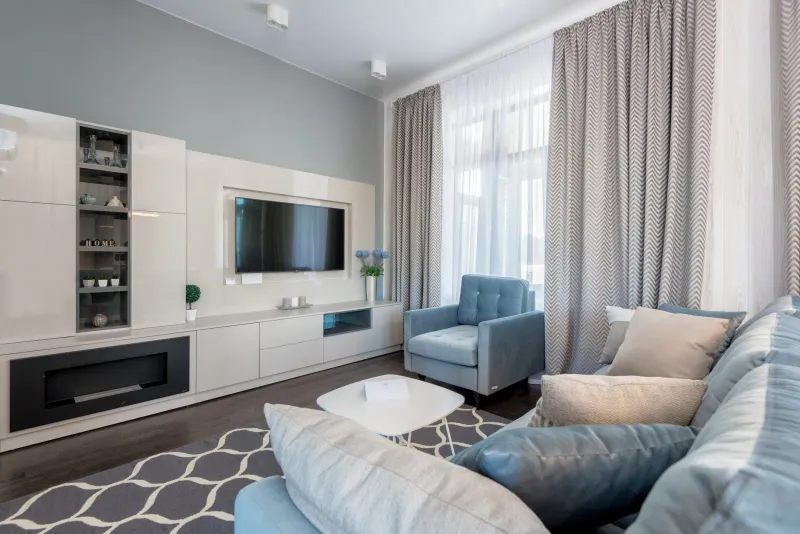
A vintage rug does not require a period-appropriate interior to function beautifully. Some of the most compelling contemporary American interiors derive considerable energy from the contrast between old and new—an early twentieth-century Heriz beneath a clean-lined modern sofa, or a worn Turkish kilim in a kitchen with white Shaker cabinetry and stainless appliances.
The key is to allow the rug's age and character to inform the room rather than dominate it. Avoid over-styling around a vintage piece in ways that feel thematic or museological. The goal is integration, not preservation. A vintage rug that is lived with, walked on, and genuinely used is fulfilling its purpose far more completely than one treated as a precious artifact.
The investment in a well-chosen vintage piece—made with knowledge, patience, and a clear understanding of what one is acquiring—tends to appreciate in ways that mass-produced alternatives simply do not. More than that, it introduces into a home something that cannot be manufactured on demand: a genuine connection to the history of human making.