One Rug, Four Rooms: The Designer's Secret to Reinventing Your Home Through Strategic Styling
There is a quiet assumption embedded in the way most Americans approach home décor: that a refreshed room requires a new purchase. A new throw pillow, a new lamp, a new rug. But seasoned interior designers will tell you something different. The most transformative moves they make often involve nothing more than what their clients already own — repositioned, re-layered, and reconsidered with fresh intention.
Rugs, in particular, are extraordinary candidates for this kind of creative redeployment. They are substantial enough to anchor an entire room's aesthetic, yet portable enough to travel from the living room to the bedroom to the study in an afternoon. Understanding how to work with what you have is not a compromise — it is a design philosophy.
The True Cost of the Replacement Habit
Before exploring the techniques themselves, it is worth pausing on why this matters financially. A quality area rug — the kind that holds its pattern, resists matting, and improves with age — represents a meaningful investment. According to home goods market data, American households spend an average of $200 to $800 on a single area rug, with design-conscious buyers frequently exceeding that range for hand-knotted or natural fiber options.
To relegate that investment to a single fixed use — one room, one season, one arrangement — is to leave significant value on the table. The designers who truly serve their clients well teach them to see each rug as a versatile asset rather than a permanent fixture.
Rotation as a Design Tool
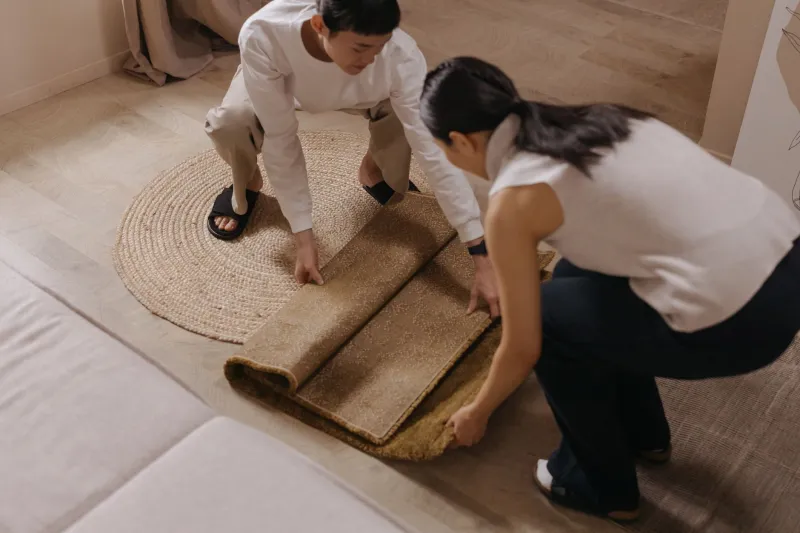
The simplest and most underutilized technique is also the most straightforward: move the rug. Not just from room to room, but within a room itself.
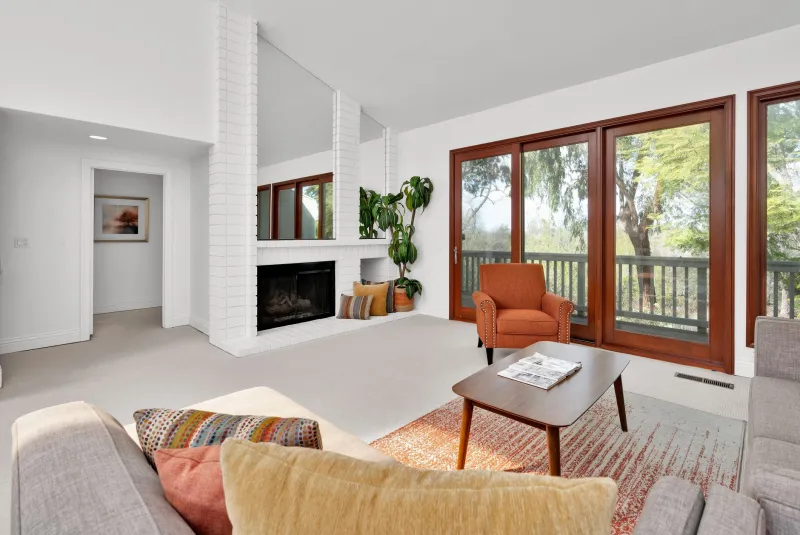
Consider a Persian-style medallion rug placed conventionally beneath a coffee table in a living room. Rotated 90 degrees and shifted toward a reading corner, with a single armchair and floor lamp placed upon it, that same rug becomes the foundation of an intimate vignette entirely distinct from the original arrangement. The rug has not changed. The room has.
Seasonal rotation adds another dimension. A jute or sisal rug that feels perfectly at home in a breezy, sun-lit living room during the summer months may be better suited to a mudroom or covered porch come autumn, when a denser wool rug brings warmth and weight to the main living space. Many designers maintain a small rug inventory — two or three pieces per primary room — and rotate them across spaces and seasons as deliberately as they would change artwork.
Layering: The Technique That Changes Everything
If rotation is the foundation of strategic rug use, layering is its more expressive counterpart. The practice of placing one rug atop another has moved well beyond the realm of bohemian interiors; it now appears regularly in the portfolios of traditional, transitional, and contemporary designers alike.
The principle is straightforward: a large, neutral base rug — a natural fiber flatweave, a solid wool, or a simple geometric — provides visual grounding for a smaller, more characterful piece placed on top. The base rug extends the functional footprint and protects the floor, while the layered rug introduces color, pattern, and personality.
This technique is particularly powerful for homeowners who own a rug they love but find it too small for their current space. Rather than retiring it or accepting an undersized look, layering it over a larger neutral transforms the arrangement into something intentional and sophisticated. A 5×8 Moroccan wool rug, for instance, placed over a 9×12 natural jute in a dining room reads as a considered design choice rather than a size miscalculation.
From a budget perspective, natural fiber base rugs are among the most affordable options on the market, making this a highly economical strategy for elevating a single statement piece across multiple rooms.
Before and After: Real-World Repositioning
To make these principles concrete, consider a scenario familiar to many homeowners. A family purchases a large, hand-tufted wool rug in a deep navy and cream geometric pattern for their formal living room. After two years, they redecorate the space with a sectional sofa that overwhelms the rug's visual impact. The rug feels lost.
Rather than replacing it, a designer might suggest relocating the rug to the primary bedroom, where it extends beneath the bed and grounds the entire room in a way the previous neutral rug never achieved. The formal living room, now free of the geometric pattern, receives a simple flatweave in a warm terracotta — purchased at a fraction of the original rug's cost — that complements the new sectional beautifully.
The result: two transformed rooms, one modest new purchase, and a beloved rug returned to a position of prominence. The investment is preserved. The design is refreshed.
Caring for Your Rugs Between Moves
Strategic rotation only works if the rugs being moved are well maintained. A few practical considerations will ensure your pieces remain in excellent condition through multiple repositionings.
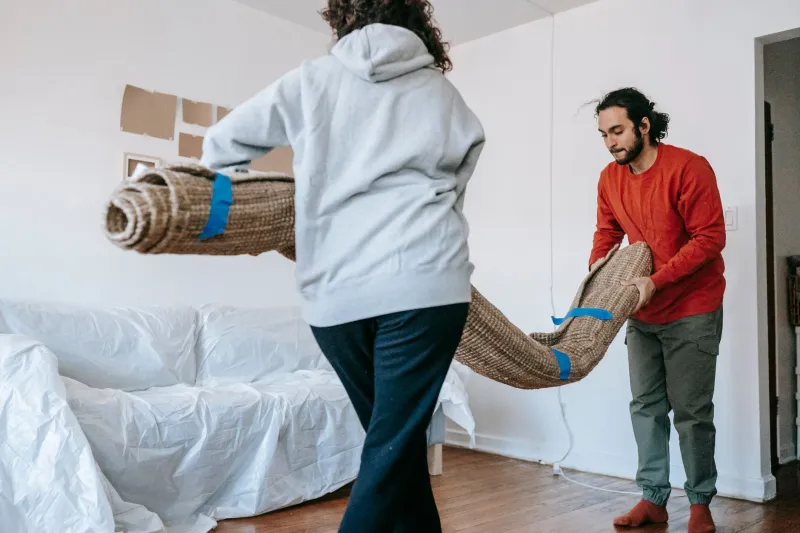
First, always use a quality rug pad beneath every placement. Pads protect both the rug and the floor, prevent slipping, and extend the life of the textile considerably. When storing a rug between uses, roll it — never fold it — and wrap it in breathable fabric to prevent moisture accumulation. Avoid plastic, which can trap humidity and encourage mildew.
Rotating rugs within a single room also distributes foot traffic and sunlight exposure more evenly, reducing wear patterns and fading. This is a technique professional rug conservators recommend for high-value pieces, but it applies equally to everyday purchases.
Rethinking the Rug as a Permanent Decision
Perhaps the most significant shift this approach requires is philosophical. In American home design culture, there is a tendency to treat major furnishings as permanent decisions — chosen once, placed once, and expected to endure indefinitely in their original configuration. Rugs have largely been subject to this same thinking.
But the most dynamic, alive-feeling interiors are rarely static. They evolve with the seasons, with shifting light, with the changing needs of the people who inhabit them. Rugs, more than almost any other element in a room, have the capacity to facilitate that evolution without requiring significant expenditure.
The designers who understand this do not simply sell rugs — they teach their clients how to live with them. How to move them, layer them, and let them travel through a home's spaces as the year unfolds. In doing so, they transform a one-time purchase into a long-term design resource.
The room you want may already be waiting — not at a retailer, but rolled up in your own closet.