When Enough Becomes Too Much: The Thoughtful Art of Editing Your Rug Collection
There is a particular kind of accumulation that happens to people who genuinely love rugs. It begins with a single statement piece in the living room. Then comes a kilim discovered at an estate sale, a runner inherited from a grandparent, a hand-knotted wool from a trip to Santa Fe. Before long, the guest room closet is stacked three layers deep, and you cannot quite remember why you held onto that faded dhurrie from your first apartment.
This is not a failure of taste. It is, in many ways, a testament to it. But at a certain point, abundance becomes obstacle — and the collection that once felt like a source of creative possibility begins to feel like a burden. Learning to edit your rugs with the same care you brought to acquiring them is one of the more underappreciated skills in home design.
Begin With an Honest Audit
Before any decisions are made, every rug in your possession needs to be seen. That means pulling pieces out of storage, unrolling them in good light, and looking at them with fresh eyes. Photographs can help here — a rug that felt beautiful in a dimly lit hallway may reveal its true condition under natural light or through the impartial lens of a camera.
As you examine each piece, ask three foundational questions:
Does it still reflect who I am? Aesthetic sensibilities evolve. A rug that felt bold and modern a decade ago may now read as dated, or simply no longer aligned with the direction your interiors have taken. Neither the rug nor your taste is at fault — this is simply design moving forward.
Is it in a condition worth preserving? Some wear adds character; other damage diminishes a piece beyond redemption. Look honestly at fiber integrity, color stability, and structural soundness. A professional rug appraiser or conservator can offer an informed opinion if you are uncertain.
Does it have a place in my home — or could it? Sometimes a rug has been languishing in storage not because it is wrong, but because it has never been placed correctly. Consider whether a change of room, orientation, or layering approach might unlock its potential before you decide to let it go.
Sorting Into Categories
Once you have assessed the full scope of your collection, it helps to sort pieces into distinct groups rather than making individual decisions in isolation. A useful framework:
- Active use: Rugs currently placed and working well within your interiors.
- Seasonal rotation: Pieces that serve your home beautifully at certain times of year — a flat-weave cotton for summer, a dense wool for winter — but do not need to be in permanent rotation.
- Waiting for the right room: Rugs you genuinely love that simply have not found their moment yet. These deserve a deadline. If a piece has been in storage for more than two years without a clear plan, it is time to reconsider.
- Release candidates: Pieces that no longer fit your aesthetic, your space, or your life. These should be moved along with intention rather than guilt.
The Emotional Weight of Letting Go
Rugs carry memory in a way that few other furnishings do. They have been walked on at holidays, sprawled across during childhood afternoons, and inherited from people who are no longer here. Deciding to part with one can feel disproportionately difficult — and that feeling is worth acknowledging rather than dismissing.
One useful reframe: a rug that no longer serves your home may be exactly what someone else's home needs. Selling a well-made piece through a reputable resale platform — Chairish, 1stDibs, and Facebook Marketplace's local listings are all viable options depending on the piece's value — gives it continued life and purpose. Donating to organizations such as Habitat for Humanity ReStores or local shelters ensures that even more modest pieces contribute something meaningful.
For pieces with genuine sentimental value that no longer work as floor coverings, consider alternative applications: a small kilim can become a pillow cover; a narrow runner might be repurposed as a wall hanging or stair tread. Giving a beloved piece a new function within your home is often a more satisfying resolution than either storing it indefinitely or forcing it into a room where it does not belong.
Storage That Protects Rather Than Prolongs Indecision
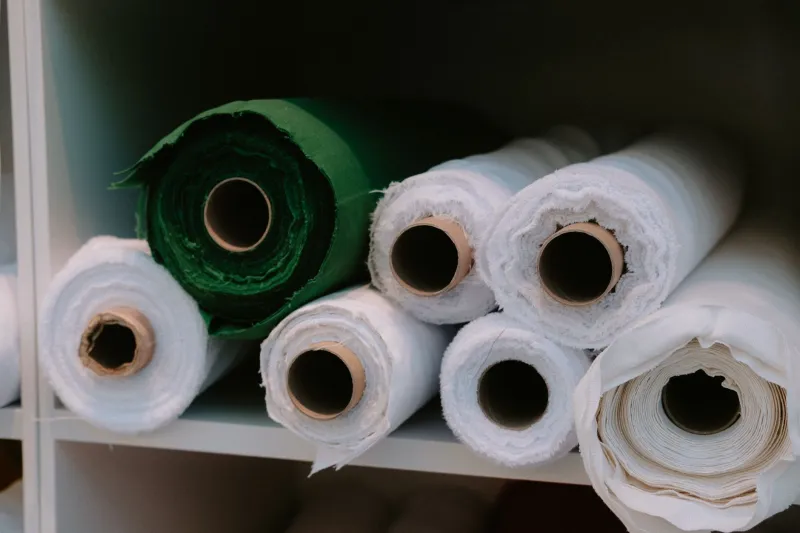
For rugs you genuinely intend to rotate — whether seasonally or as your interiors evolve — proper storage is essential. Rugs should always be rolled, never folded, to prevent permanent crease damage along fiber lines. Roll them pile-side inward around an acid-free tube if possible, then wrap in breathable cotton muslin or an archival storage bag. Avoid plastic, which traps moisture and invites mildew.
Store rolls horizontally in a climate-controlled environment. Basements and attics, however convenient, are rarely ideal due to humidity fluctuations and temperature extremes. A dedicated closet or interior storage room is far preferable.
Label each roll clearly — not just with the rug's description, but with notes on its last use and where you envision placing it next. This small administrative habit prevents the common scenario of opening a storage closet, feeling overwhelmed, and closing it again without making any decisions.
Keeping the Collection Current
Editing is not a one-time event. A well-curated rug collection, like any living design element in a home, requires periodic reassessment. Many professional designers recommend a seasonal review — coinciding with the natural transitions in January and June when interiors tend to be refreshed — as an opportunity to rotate pieces, reassess what is working, and move anything that has overstayed its welcome.
The goal is not minimalism for its own sake. A home with multiple beautiful rugs, each purposefully placed and genuinely loved, reflects a richness of design sensibility that is worth cultivating. The aim of editing is not to strip your collection down, but to ensure that every piece within it is earning its place — on the floor, in rotation, or in your memory.
A rug that is truly right for a room does not compete for attention. It settles into the space and makes everything around it feel more considered. That quality — the sense that a piece belongs exactly where it is — is the standard against which your entire collection is worth measuring.