What the Floor Tells the Designer: Decoding Your Room's Unspoken Aesthetic Story

Every rug—or conspicuous absence of one—communicates something meaningful about the room it inhabits. Experienced designers have long understood that flooring functions as a diagnostic tool, revealing a space's strengths, its unresolved tensions, and the lifestyle of those who live within it. Learning to read these signals transforms an ordinary observer into a genuinely perceptive one.
The practice is less mystical than it sounds. It is, at its core, a discipline of careful attention—the same kind a skilled physician applies when reading physical symptoms or a seasoned editor applies when reading a manuscript. The floor of a room is always speaking. The question is whether anyone is listening.
The Bare Floor: A Silence That Says Something
When a room has no rug at all, the instinct is often to view that as a neutral condition—a blank slate. In practice, it rarely is. A living room furnished with sofas, side tables, and art on the walls but nothing underfoot typically signals one of several things: an owner who has not yet committed to a design direction, a space in transition, or a deliberate minimalist stance that may or may not be serving the room well.
Hard floors—whether hardwood, tile, or polished concrete—carry their own visual weight. Without a rug to anchor the furniture grouping, that weight tends to scatter. Seating arrangements can appear to float rather than cohere. The room may feel acoustically harsh, particularly in open-plan homes common across the American West and in newer construction nationwide.
When a designer enters a bare-floored room and immediately senses something unresolved, the absence of a rug is frequently the root cause. The fix is not always adding more furniture or more art. Sometimes the most transformative intervention is simply placing something meaningful beneath what is already there.
Pattern as a Window Into Personality
The rug a homeowner chooses—when they choose at all—is among the most revealing decisions in a room. A bold geometric in high-contrast black and ivory in an otherwise neutral space suggests someone who craves visual punctuation but may be hesitant to commit to color on walls or upholstery. A faded floral in muted rose and sage, placed beneath a modern sectional, often belongs to someone navigating the tension between inherited aesthetic preferences and a contemporary lifestyle.
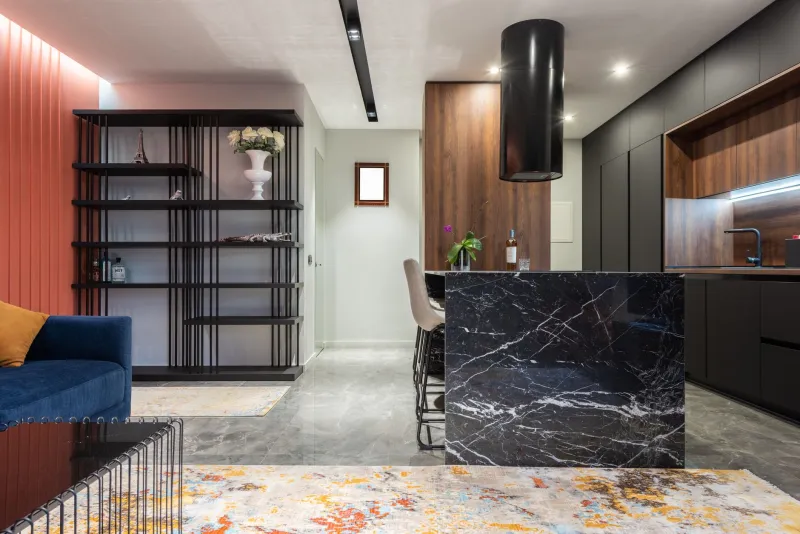
Think of pattern as a kind of visual autobiography. Tribal motifs—Moroccan Beni Ouarains, Persian Heriz designs, Southwestern Navajo-inspired patterns—tend to appear in homes where the occupant values authenticity and craft. Abstract, painterly rugs frequently signal an appreciation for contemporary art. Solid or tone-on-tone textures suggest either rigorous minimalism or a desire to let other elements in the room take center stage.
None of these readings are absolute. But they are useful starting points. When a designer can identify what a rug is communicating, they can begin to assess whether that message aligns with the room's broader intent—or whether it is quietly working against it.
Placement as a Diagnostic Tool
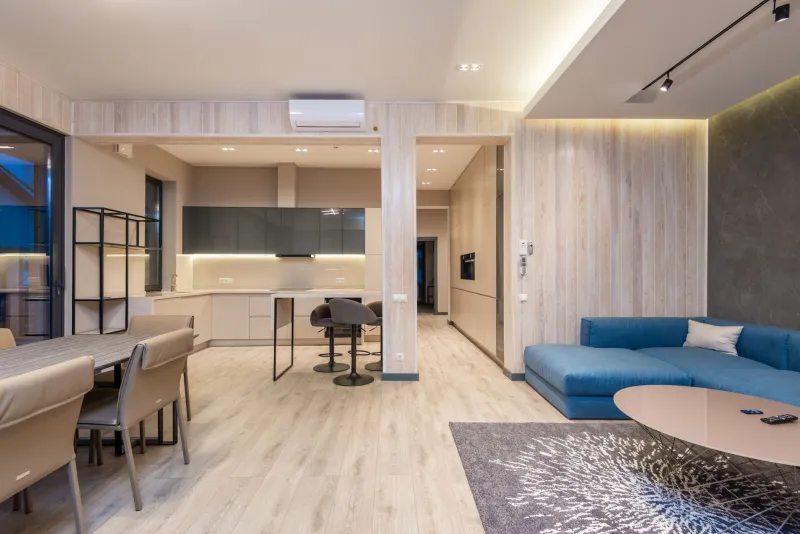
How a rug is positioned within a room reveals as much as which rug was chosen. The most common error in American homes is the undersized rug placed too far from the furniture it is meant to anchor. Front legs on, back legs off. Or worse: all four legs entirely clear of the rug, leaving it stranded in the center of the room like an island no one can reach.
This placement pattern typically indicates that the rug was purchased without careful measurement—or that it was chosen for its appearance in isolation rather than its relationship to the space. A designer reading this situation understands that the room's sense of fragmentation is not a furniture problem. It is a proportion problem, and the rug is its clearest symptom.
Conversely, a rug that is correctly sized and thoughtfully placed—furniture legs fully or partially on the rug, the rug extending to define a clear zone within the room—signals a certain design literacy. Even if the rug itself is modest in quality or unremarkable in pattern, correct placement demonstrates that someone has thought carefully about spatial relationships. That foundation is always easier to build upon than to correct from scratch.
Condition as a Chronicle of Use
The wear patterns on a rug are among the most honest records a home can offer. Heavy traffic lanes worn into a hallway runner tell you exactly how a household moves through its space. Fading concentrated near a window reveals that the rug has lived in that spot for years, likely because it works well there. Stains clustered near a coffee table speak to the reality of daily family life.
Rather than viewing wear as purely negative, experienced designers treat it as information. A rug that is worn precisely where it should be—where people walk, where children play, where pets settle—is a rug that has been doing its job. The question then becomes whether it has reached the end of its useful life or whether it might be cleaned, repaired, or repositioned to continue serving the space.
A rug in pristine condition in a well-used room, on the other hand, often indicates that it has been placed somewhere it does not belong—perhaps in a formal sitting room that no one actually sits in, or beneath a dining table where the chairs have been pushed back so carefully that the rug has never truly been used. That level of preservation can be its own kind of signal: a room designed for appearance rather than life.
The Rug as a Mirror
Ultimately, what this diagnostic practice offers is a form of honest self-reflection. Most homeowners do not consciously consider what their flooring choices communicate. They select what they find appealing, what fits the budget, what arrived in time for a dinner party. The accumulation of those choices, however, forms a coherent—if unintentional—portrait of their aesthetic priorities and domestic habits.
Becoming a more perceptive reader of your own space does not require a designer's credentials. It requires only a willingness to look at familiar rooms with fresh eyes and ask what story the floor is telling. Is the rug the right size for the room? Is its pattern in conversation with the rest of the space, or in conflict with it? Does its condition reflect genuine use, or careful avoidance?
Answering those questions honestly is the first step toward a room that feels not merely decorated, but genuinely resolved. The floor, as any experienced designer will attest, rarely lies.