Woven Into the Family: A Designer's Guide to Living Beautifully With Inherited Rugs
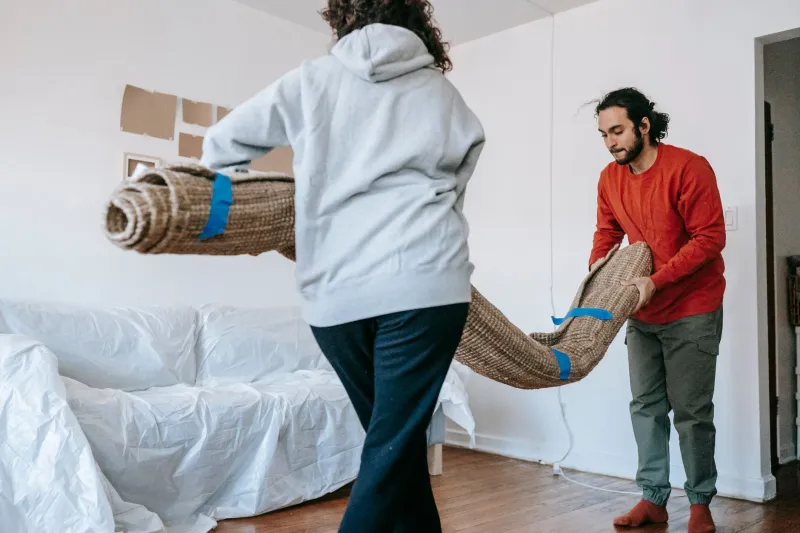
There is a particular kind of paralysis that sets in when a beloved family rug arrives at your door. Perhaps it came rolled in brown paper after an estate sale, or was quietly pressed upon you after a parent's move to a smaller home. Whatever the circumstances, you now find yourself the steward of something irreplaceable—and the custodian of a genuine design dilemma.
The rug is beautiful, in its own way. It is also, perhaps, a 9-by-12 Persian Tabriz in burgundy and navy that has absolutely no business sitting in your light-filled, Scandinavian-leaning living room in Portland or Nashville or Scottsdale. And yet, letting it languish in a storage unit feels like a small betrayal.
This tension—between emotional obligation and aesthetic intention—is one that interior designers encounter with surprising frequency. The good news is that it is entirely resolvable, provided you are willing to approach the problem with both clear eyes and an open mind.
Begin With an Honest Assessment
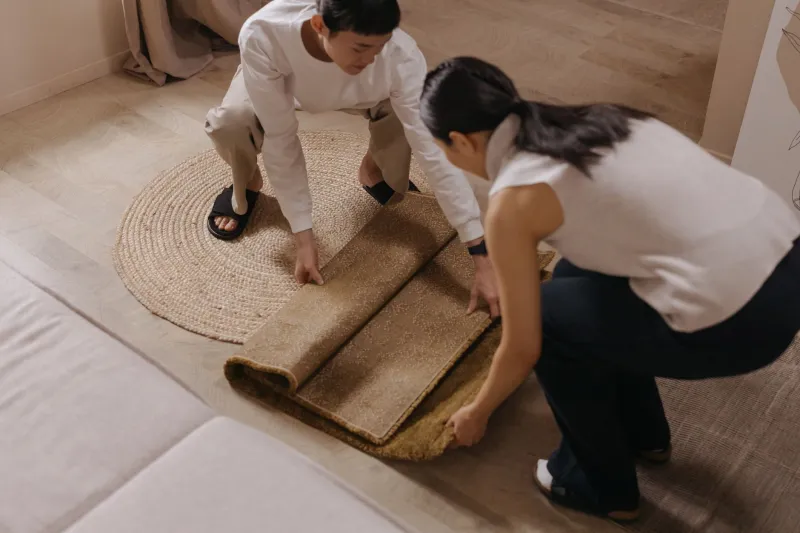
Before any design decisions are made, the rug itself deserves a thorough evaluation—one that separates sentiment from condition. Lay the piece out in a well-lit room and examine it closely. Look for areas of wear, color fading, fraying edges, or structural damage to the foundation. Note whether the pile is even or whether certain sections have been compressed beyond recovery.
If the rug is genuinely fragile, a professional conservator—not merely a cleaning service—should be consulted before the piece is walked on, repositioned, or subjected to any further stress. Organizations such as the American Institute for Conservation can help connect you with textile specialists who understand the difference between restoration and renovation.
This assessment phase also invites a more personal reckoning: what, precisely, does this rug mean to you? Is it the specific object you are attached to, or is it the memory the object represents? That distinction matters more than it might initially seem.
The Case for Professional Restoration
For rugs with genuine structural integrity and significant historical or monetary value, professional restoration is often the most responsible path forward. A skilled conservator can reweave damaged sections, stabilize fraying selvedges, and gently clean accumulated grime without compromising the original dyes or foundation.
Restoration does not erase a rug's age—nor should it. The goal is stabilization, not transformation. A well-restored antique rug retains its patina, its slight irregularities, and the warmth that only decades of use can impart. These are qualities that no new rug, however masterfully produced, can replicate.
The investment in restoration is frequently worthwhile, both financially and emotionally. A quality antique rug that has been properly conserved will hold or appreciate in value, and it will continue to function as the living, usable object it was always meant to be.
Reimagining the Rug's Role in Your Space
Assumptions about where a rug belongs are worth questioning. The inherited piece does not have to anchor the living room simply because that is where it lived in your grandmother's house. Consider the full range of possibilities your home presents.
A large formal rug might find unexpected purpose in a dining room, where its scale is honored and its patterns are viewed from above, almost like a painting underfoot. A smaller accent rug might be most at home in a study or reading nook, where its colors can be appreciated up close without competing with the surrounding décor. Even a hallway or landing can serve as a dignified setting for a piece that might feel overwhelming in a larger room.
In contemporary American interiors, inherited rugs often perform best when they are treated as the intentional focal point of a room rather than as one element among many. Build the surrounding palette around the rug's existing colors rather than asking the rug to conform to a palette already in place. Pull a secondary tone from the rug's border and repeat it in throw pillows, window treatments, or a single accent chair. The result is a room that feels considered rather than compromised.
When Contrast Becomes a Design Asset
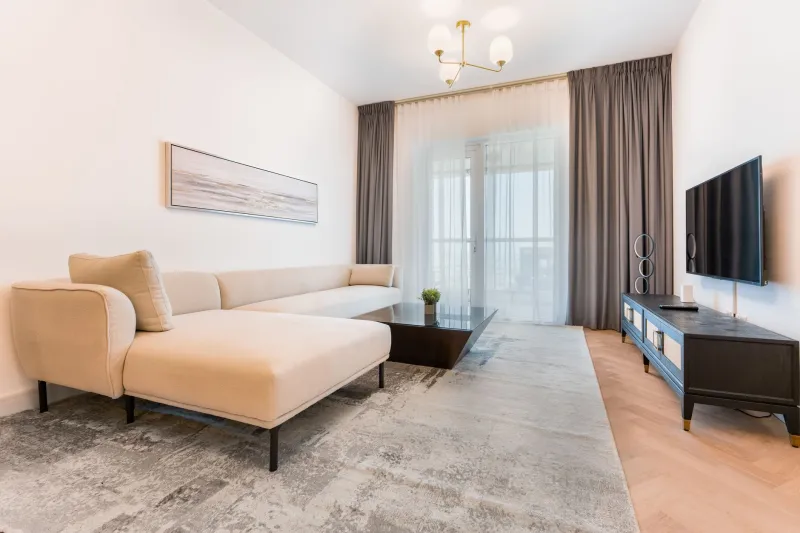
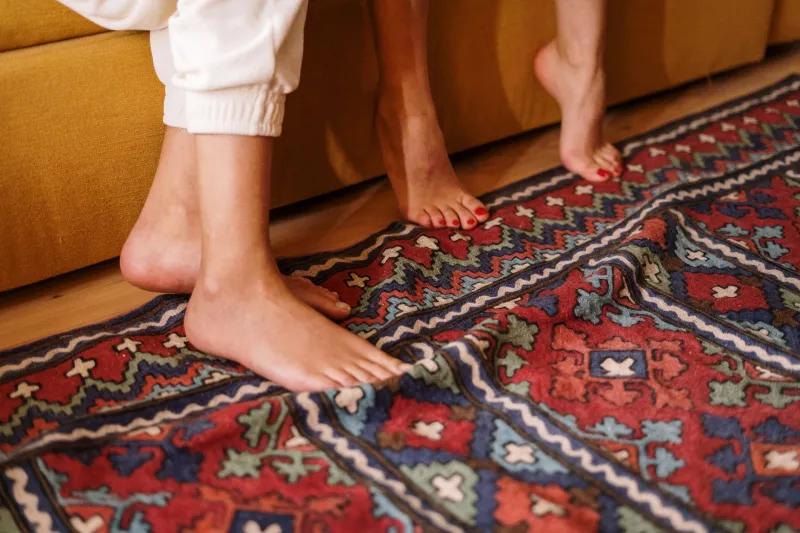
There is a persistent misconception that heirloom rugs and modern interiors are fundamentally incompatible. In practice, the opposite is frequently true. A richly patterned antique Oushak or a faded Kilim can provide exactly the visual warmth and human scale that minimalist or contemporary rooms often lack.
The key lies in committing to the contrast rather than softening it. Pairing a traditional rug with clean-lined furniture in neutral upholstery creates a dialogue between eras that reads as intentional and sophisticated. The rug becomes the room's anchor, its most emotionally resonant object, while everything around it recedes gracefully.
Some of the most compelling rooms published in American shelter magazines over the past decade have been built precisely on this principle—a worn Persian centered beneath a sleek walnut dining table, a tribal runner grounding a kitchen with white shaker cabinetry. The juxtaposition, handled with confidence, elevates both elements.
Knowing When to Let Go
Not every inherited rug can or should be integrated into a functioning home. Some pieces are too fragile for regular use, too large for available spaces, or so tonally specific that no honest design solution presents itself. In these cases, there are alternatives that honor the object without forcing an uncomfortable compromise.
Wall mounting is a legitimate and historically grounded option for fine textiles. A properly mounted rug—supported by a sleeve system that distributes weight evenly across the foundation—becomes a work of art rather than a floor covering, protected from the wear that daily foot traffic inevitably causes.
For pieces that truly cannot find a home in your space, consider whether another family member might be better positioned to use and appreciate them. Donating to a museum with a textile collection, or consigning through a reputable auction house, ensures that the rug continues to be valued rather than deteriorating in storage.
There is no failure in recognizing that a particular object belongs in a different context. Stewardship sometimes means passing something along.
The Deeper Design Principle
At its core, the inherited rug dilemma is a question about how we relate to the past within the spaces we build for our present lives. A home that includes objects of genuine history—imperfect, layered, irreducibly specific—tends to feel more fully inhabited than one composed entirely of new acquisitions.
The rug your family walked on for generations carries something that cannot be sourced from any showroom or online marketplace. It carries time. Treated thoughtfully, that quality does not complicate a modern interior—it completes it.